Showing posts with label Minakami. Show all posts

Monday, September 12, 2011

Ita Choco

Sadly, this past weekend was our last in Minakami. We had some fun times there but we just weren't using the house enough to warrant holding onto it. I will miss a number of things about those weekends, including those jaunts to Besia -- they were a real cultural experience. We rarely bought anything besides groceries. Yet each time I unearthed something weird or interesting to look at. Consequently, this last visit was kind of bittersweet for me.


My find-of-the-day on Saturday was Ita Choco, the latest from the folks over at Morinaga. I absolutely love the package graphics (especially the bold color scheme and the retro font) and the architectural metaphor (ita = board or plank) did not go unnoticed either. Pronounced "eat-a-choco," this name was surely someone's idea of bilingual fun.


As you can see, the concept is a bar of chocolate divided into hollow "boards." Instead of loading these compartments with caramel or nougat, each one is filled with vanilla-ish ice cream.


Regrettably, we mistakenly put the bar in the fridge when we got home. As a result, the ice cream was a bit runny and difficult to eat round robin style as we are wont to do but I am sure you get the picture.

Thursday, January 27, 2011

Gunma Brown Rice

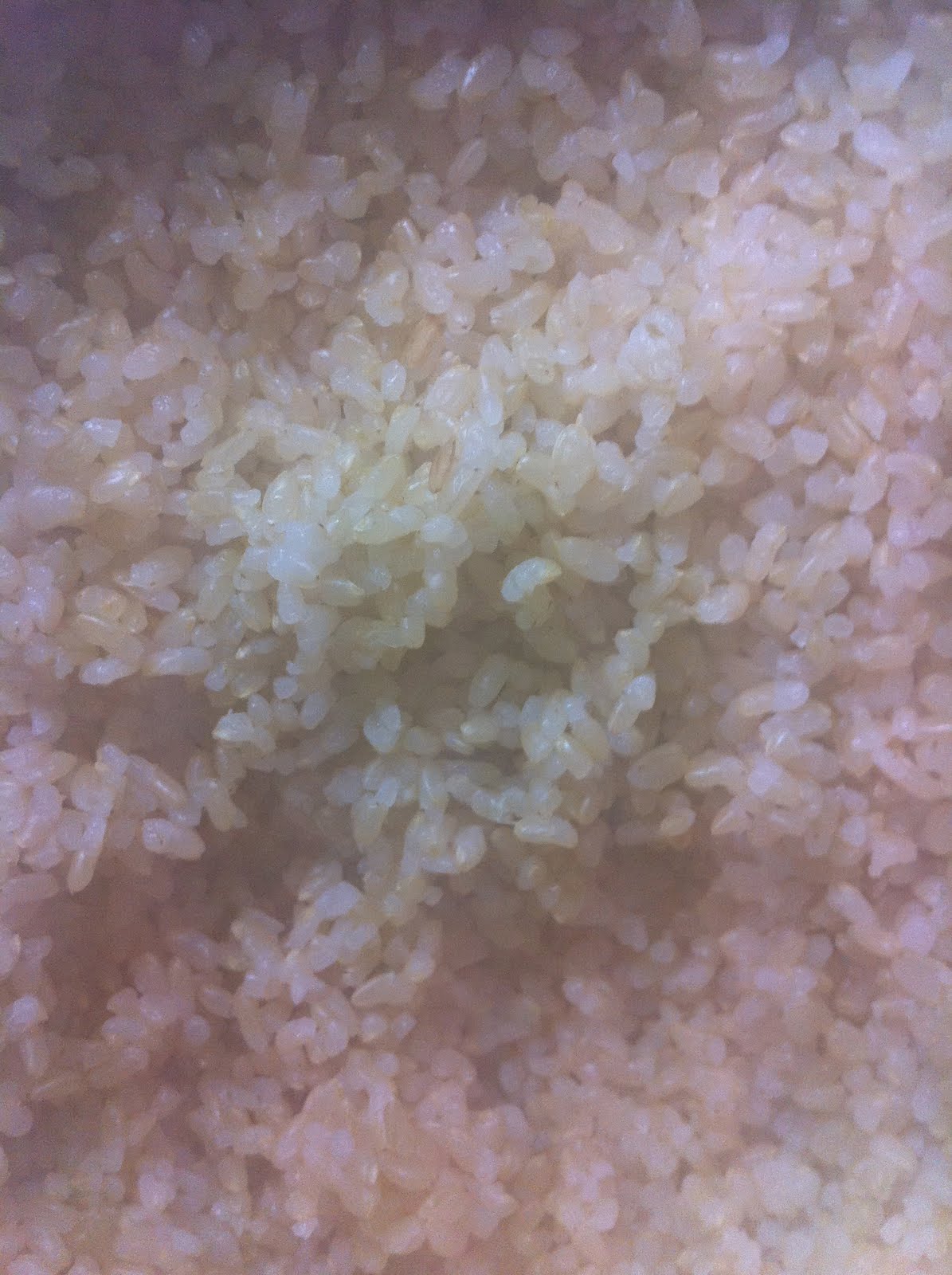
On our way home from Minakami on Sunday, we made a quick pit stop at the farmers' market in Showa. The goal was to stock our Tokyo larder with some local produce and home grown brown rice -- neighboring Niigata is one of Japan's most prolific rice producing prefectures. After surveying the bounty, we rounded up the usual suspects: baby broccoli, young asparagus, sweet potatoes, hot peppers for Francia and then headed to the rice bar where we had a number of different options. Surprisingly, the saleswoman steered us not towards the more expensive, Niigata Koshihikari (considered the best of the best by many connoisseurs) but towards rice grown in the nearby fields. Plus, as Abby observed, the level in that bin was the lowest. When in Rome, it is definitely a good idea to do as the Romans do.


After we placed our order for five kilos, the clerk measured the rice. I suspect that most rice in Japan is slightly processed before it reaches shops, even the Showa farmers' market. Had we wanted pure, white rice, she would have poured our purchase into the polisher to remove the rest of the bran. Instead, she deposited our rice into a plastic bag and sealed it shut.


The following evening, the Gunma rice made its debut at our dinner table. Reader, it is out of this world. Fresh and fluffy, this rice is so full of flavor. The usual supermarket fare just can't compare. Sprinkled in and among the light brown kernels is the occasional crunchy brown grain. Some pick them out but they are welcome in my rice bowl anytime.

Wednesday, October 13, 2010

Minakami Rice


This time of year, Minakami is an armchair agriculturalist's dream. Everywhere, everyone is harvesting something. Why this past weekend alone, we spotted kiwis on the vine, mushrooms of every shape and size, chestnuts in their spiky casings, purple eggplants ready for picking, globe-like persimmons, apples (more on that later) and rice, rice rice!

/>


/>


Located on the rim of Japan's rice bowl, the area is a patchwork of tiny, terraced paddies. Basking in the autumn sun, the fields are now lined with golden stalks drying on makeshift bamboo racks. Amazingly, all farmers cut and hang the exact same way. The scene is so picturesque, straight out of an Impressionist painting. No wonder we rented the house.


A weekend in Minakami would not be right without dropping by the mushroom lady who runs a tiny, mostly mushroom, produce shop on the road to Tsukiyono. In addition to shiitake, maitake and one other kind of fungi, we bought 5 kg. of new harvest rice. Having just arrived from the farmer, the rice was still in a big paper sack like this one with the the traditional twisted closure on top. We watched as she deftly ladled out the appropriate amount. And then threw in a little something extra.


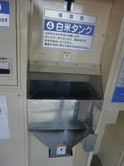
At the other end of the spectrum stands the rice vending machine. Though the quaint factor is missing, the convenience can't be beat. Located at the edges of parking lots, next to the takoyaki stand or drive-thru dry cleaner, they make it easy for motorists to pause and purchase 24 hours a day.


Like an instant photo booth, you simply select the type and quantity of rice, deposit your money, as Okome-kun is demonstrating above, and then hold your chosen vessel under the spout as shown below.

Monday, July 5, 2010

Minakami Blooms!


Minakami is in full bloom! The other day Pippi and I took a lengthy walk over hill and dale to inspect all the new growth up close. Voluptuous greenery is everywhere! And flowers, both wild and cultivated, dot the landscape with intense bursts of color.


Wild plums clustered together at the side of the road.


Though its apples won't be ripe for the picking until the end of August, Farmer Suzuki's orchard is already laden with fruit. Hopefully his blueberries will be ready next weekend -- the bushes are just barely bearing the weight of the berries.


Yet nothing impressed us more than the rice paddies: terraced plots of land now lined with neat rows of green shoots. Measuring about 9 inches high, they still have a ways to go until their autumn harvest -- no rice kernels visible yet. But they have certainly come a long way from the tiny plants tenderly placed in the mud last spring. Back breaking work that. No wonder all the local farmers seem to suffer from scoliosis or osteoporosis. It was hard to keep Pippi from nibbling the nascent plants. I suppose these water-logged grasses are just the thing on a steamy hot and humid day. Especially if you are wearing a fur coat.


Recessed in the ground, the bottom of each paddy is currently covered with a layer of water, maybe 2 or 3 inches deep. I noticed that its surface was shimmering and assumed that winged insects were making continual water landings. But a studied look revealed a submarine world in miniature.


The paddy was teaming with tadpoles! Little grey, wiggly ones at various stages of development. And where there are tadpoles, there are bound to be frogs. While the muddy water masked the swimmers, the bright green leaves were the perfect foil for the newly hatched jumpers. Active little critters, they do not like to sit still and pose for pictures hence the blurry images. But, as you can see, Mother Nature really gave them a running start by outfitting them with superb camouflage.

Monday, February 8, 2010

Minakami Blizzard!


This is our first winter in Minakami so we have no basis for comparison but by any scale this amount of snow would surely constitute a blizzard. Even our neighbor, Mountain Man Tom, declared this unusual. From my perch at the dining table all I can see is snow. Their dark bark adorned with a wide, white stripe down their backs, the trees look like skunks. The icicles are more impressive than ever. The atmosphere is so white it is almost blue. And the flakes just keep falling. Some are heavy and wet. Others do a little a dance on their way down. Together they cover every horizontal (and not so horizontal) surface.


When we arrived on Friday night, the air was full of flurries. But by the time we woke up on Saturday, our world was blanketed with a thick, luscious layer of fresh snow. Pippi and I watched from the living room window as the skiers slid down our steep access road …. in the Jeep! With David at the wheel I knew car and passengers were in good hands. But no traction is, well, no traction. Fortunately a close encounter with a tree brought their little adventure to a halt. No damage occurred but the conditions were clearly not driver-friendly.


Needless to say, Pippi and I decided to hunker down. In fact, hiking really wasn’t an option since the height of the rapidly accumulating snow was above Pippi’s shoulders! Just getting her to go out and pee required concerted cajolery. Plus we felt a familial duty to keep the home fires burning. Literally. We didn’t even bother to change out of our PJs. Turned out the skiing conditions were sub par – too cold and too much snow? Is that even possible? Maybe it was the wrong “kind” of snow.


By the time we went to bed, there was at least a respectable 15 cm. layer on the roof. But overnight the amount doubled or more. And the snow just keeps falling. It is so beautiful and unspoiled.

Monday, January 25, 2010

The Roofs of Minakami


This is the front porch of our house in Minakami and the impressive collection of icicles that welcomed us this past weekend. Beautiful but lethal. Below is an array of photos of our neighbors' houses. Though clad with metal roofing today, I bet that most were once topped with thick thatch. In fact, it may still be underneath. Unfortunately, Japanese thatch does not last that long. It is expensive to replace and only possible if the right roofer can be found -- thatchers are a dying breed.


With its red coloring and hipped ends, this one is particularly photogenic all year round. But you have to admit, it does look especially good against the snow.


Throughout Japan, roof shapes vary, reflecting regional climate conditions and different agricultural pursuits. Though located in Gunma, the houses above and below seem to be variants on the "broadside helmet" shape found in the neighboring Nagano and Saitama Prefectures. I love the way the massive roof hovers protectively over the house pictured above.


This house has clearly seen better days but the roof shape still does a good job of keeping the snow from accumulating. Can you see the vague resemblance between its end elevation and a Japanese helmet?


In the case of storehouses such as this one, the outermost roof is slightly elevated for ventilation (there may be a second layer of some sort underneath). Made of thick, plaster-like masonry for fire protection, these tiny, little buildings were once entrusted with the family's most precious possessions. Wonder what it is in there today. Consequently, they do not have many windows but a little fresh air keeps the contents from rotting. And extending the eaves protects the building from heavy rains.


This house is under construction nearby. The client, a doctor who owns property further up the hill as well, is rebuilding a minka farmhouse as his weekend home. If you look carefully, you can see the original, dark wood frame that the carpenters are incorporating into the new construction. I am sure the finished product will be spectacular though I wonder about the siting. It seems too close to the road and the utility tower nearby is unsightly (though hopefully not visible inside).


On Sunday, when the carpenters were not on site, Abby and I did a little investigation. Taking advantage of the tree's bent shape and its inherent structural strength, some of the original roof beams are curved. In lieu of nails or hardware, the old beams are lashed together with rope, enabling the easy deconstruction, transport and rebuilding of these historic houses. It is nice to see someone breathing new life into this one.


Lastly, even this petite, roadside shrine has not just one but two roofs of its own.